

Between Signals
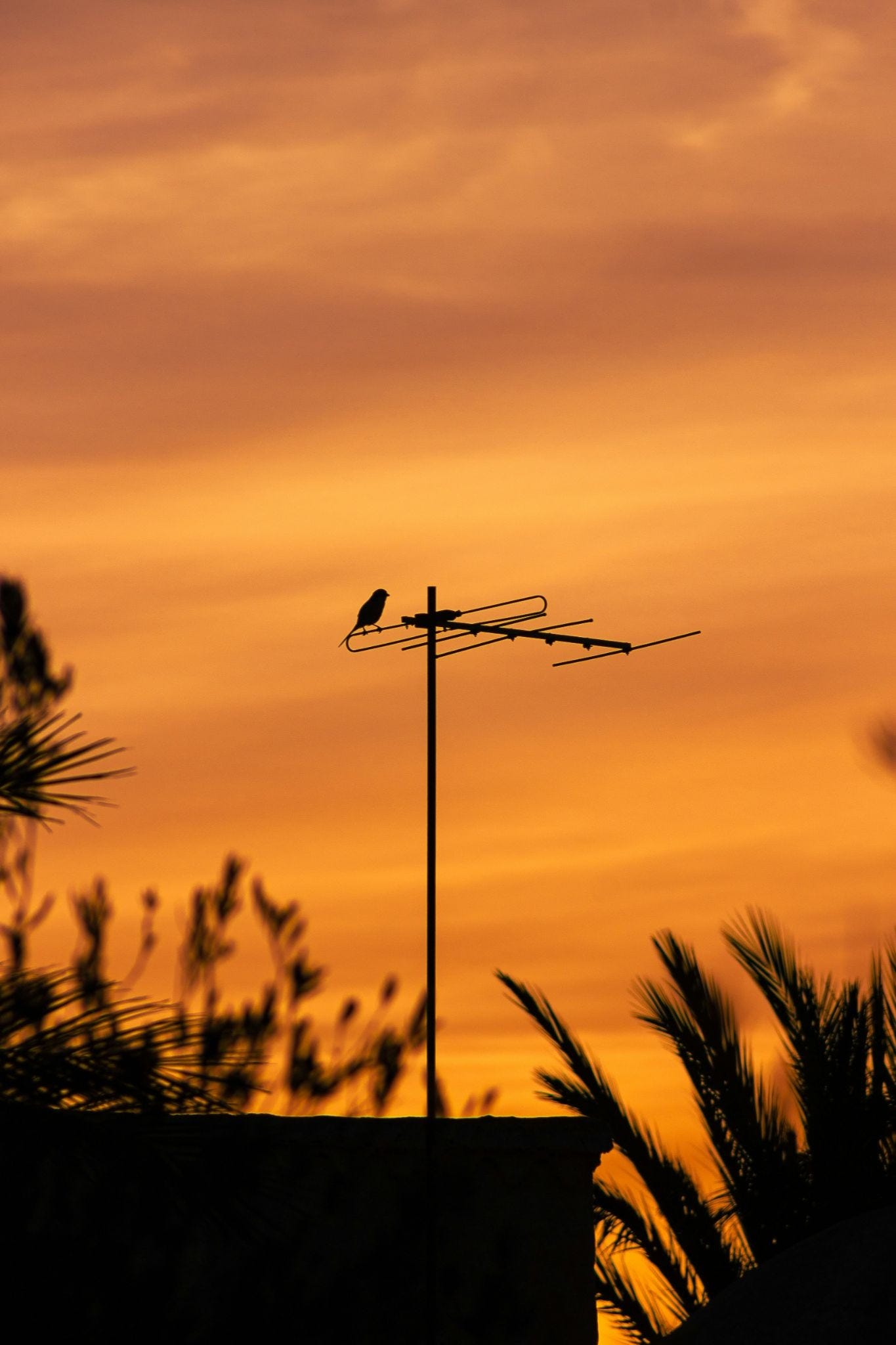
When I was a kid, we had a huge antenna at the cottage and when we went to watch television, inevitably, my father would end up outside while we yelled at the top of our lungs for him to stop turning the antenna when the signal was just right. Sometimes you had to settle for a good enough image, where the signal was just in between the sweet spot and noise. It’s easy to imagine this scenario in black and white, as if we have moved on from that analogue technology, but if you think about it, we haven’t moved an inch. Wifi cutting out, your favourite movie buffering, not being able to access your streaming service because you’ve forgotten the password or there is some issue with the platform or a cyber attack.
There is a space in between that has persisted and I believe it always will.
If you think about it, while we endeavour to experience our identities as seamless and constant, they are anything but. We experience moments of anxiety and distraction. Thoughts and feelings come zooming in when we hear a piece of music or smell a familiar smell; we are constantly creating the moments we experience anew. In Proust’s masterwork In Search of Lost Time, he spends considerable time in the first volume exploring the moment we wake up and have to remember who and where we are. This is a daily affair as we put ourselves back together and face another day.
Living in the Cracks
I am preoccupied with how this affects us in relationships, both within ourselves and with others. Within ourselves, it means that we are constantly exerting considerable emotional and intellectual labour trying to form a composite of who we are, one that we can not only live with, but experience the full range of emotions that we have access to in our lives. I have been amazed looking at thousands of dreams of my patients and my own where the imagination is trying to bring together parts of our lives, past present and future so that we can wake up and have the best shot at feeling integrated.
Someone will dream that a grandmother, perhaps no longer here, is making their favourite dish in their current kitchen, even though she lived her entire life in another country. Someone else will remember their first boyfriend or girlfriend decades later and the feelings will be as real as the day they met them. It’s as if we have to continually survive the myriad memories, experiences, intrusions and imaginations that make up our daily experience and create a good enough landscape to inhabit.
With others, we then need to be able to not only bear our own fragmented experience, but manage that next to another, especially in love, parenting, work and friendship. As the essayist Adam Phillips says about therapy, what we usually discuss is quite ordinary, in the sense that we spend a lifetime going over and over these important relationships in our lives, but they are firmly in the everyday. While it’s a cliche to think about therapy as a place where we discuss our mothers and fathers, why not?
Why wouldn’t we come back again and again to the most profound and intimate relationships of our lives? Intimate not in the sense that we always feel close or loved, but in the reality that it is how we came into the world, even if we for whatever reason did not get to meet our biological parents; these are the foundations of our existence and the fact that we are continually evaluating our sense of self, no matter how disturbing it can be, simply makes sense.
And if we add that three dimensionality to the people we love in our life, or people that we need to interact with in professional or social settings, well then no wonder things can get extremely complex. Think about raising a child, and not having felt a certain feeling since you were child. Next thing you know, it’s 2am and your child is crying, and that experience unlocks a memory in you, whether conscious or not. Now, you not only have to process that experience in some way, but also be a parent to the child, and all too often, those two separate tasks get muddled and we get overwhelmed.
We Need Every Instrument
I often think of the therapeutic process as if we are conducting a symphony with myriad instruments, and the more tuned into and familiar we are with each one, the more options we have to experience the day-to-day. The thing to keep in mind with the symphony is that it can both play the most exhilaratingly beautiful music, and it can also bring us to our knees in despair. That is the point, the power is not in the ability to be happy and optimistic, but to be able to move through feeling states with a flexibility, richness and openness in the sense that an orchestra musician is tasked with playing the music at hand, even if it represents some of the darkest experiences known to us.
As my teacher would say to me “Success and failure in life are in equal measure, we hope for success, but it can go either way”. There’s a great story about the late psychoanalyst James Hillman. A friend met him for lunch, and after paying the bill, the waiter said “Have a nice day!”. James, without missing a beat, quipped “What if I don’t want to?”. This could at first glance seem like a cute anecdote, but it points to something much deeper. Safety is profoundly misunderstood, whether it’s the safety of our minds, or the safety of an intimate relationship.
The Intensity of Safety
Rather than thinking about safety as an ideal we aspire to so we feel calm and resolved, we would be better to think about it as the lever that opens the most intense floodgates. Just think about states of being where you are absolutely connected to yourself, the 40th km of a marathon, the moment you have to bury a loved one, often in these moments, we live out the most intense and transcendental experiences of a lifetime. Safety opens portals to other worlds in us, and while that might be the intense joy of experiencing a lifelong accomplishment, or looking into the eyes of your child as you sing them to sleep, it might also be the recognition of a new insight that brings you to pieces, or a goodbye to someone you love where you cannot bear another second.
I do not write this from the standpoint of assuming that we can acquire a knowledge that makes these experiences more bearable. While it might be true that developing and having a deep curiosity evokes a sense of recognition in us that we are undergoing a profound change, and there may be a small part of us winking from a distance as we are torn apart, the nature of transformation is that we are uncertain of its outcome and who we will be on the other side. The fragility, fear and awesomeness of this should never be underestimated. It is akin to how I often feel when working with a couple where they recount countless stories of hits and misses in their life and lament that things were not cleaner, or that they could have navigated things better. While this might be true in certain cases, I never imagine that the therapeutic process will somehow tame this ambition or the possibilities of more lived life, quite the opposite, I celebrate the desire to kick their world larger and throw themselves into ever increasing possibilities. This will, as previously mentioned, demand more capacity to deal with the fragmentation and existential questions that will surely come up, but why else live?
I’ll give the final word to the great Jacques Brel:
Et plus le temps nous fait cortège
Et plus le temps nous fait tourment
Mais n’est-ce pas le pire piège
Que vivre en paix pour des amants
And the more time accompanies us
The more time torments us
But isn’t the worst trap
For lovers to live in peace
-Jaques Brel, La Chanson des vieux amants
What are your in between spaces? Feel free to let me know.
That was a characteristically elegant and thoughtful piece of prose.
My favorite passage was:
“[T]he power is not in the ability to be happy and optimistic, but to be able to move through feeling states with a flexibility, richness and openness.”
I think that's an important reminder of how best to live one’s life, even when often beset by setbacks, difficult emotions, and overwhelming experiences.
Finding the presence to do that — I tend to equate presence with the notion of safety as you've defined it in this post — as one of life's greatest and most rewarding challenges.